Vashe
FEATURES
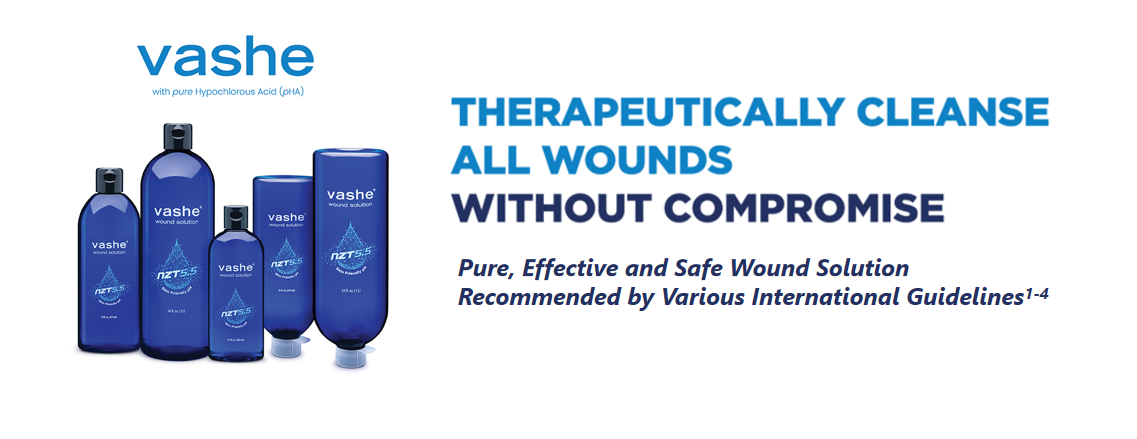
Vashe Wound Solution is a wound cleanser containing pure Hypochlorous Acid (pHA): a vital molecule produced by the human body’s own immune system when fighting harmful bacteria and infection.
Kills 99.9% of pathogens (fungi, spores, virus, multi-drug resistant bacteria) within 15s and disrupts biofilm after short exposure5,6,7
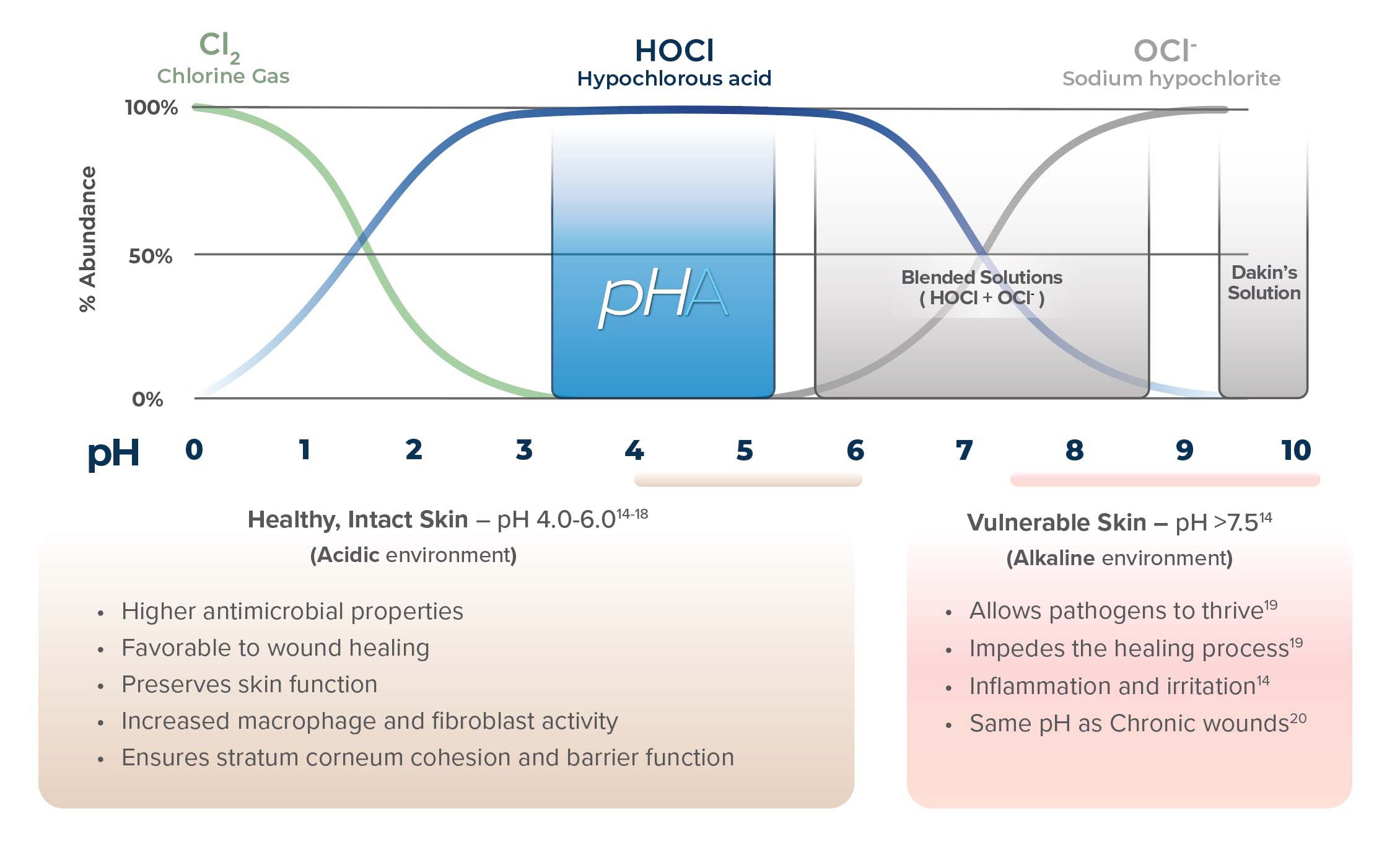
Pure Hypochlorous Acid (pHA) has a pH range of 3.5 – 5.5, the same pH level as healthy, healing skin8
No contraindications and non-cytotoxic1,5
Reduces pain and odour16
INDICATIONS
Vashe is effective and versatile on different wound types including:
Chronic Wounds
Venous Leg Ulcers
Diabetic Foot Ulcers
Pressure Injuries
Acute Wounds
Burns
Trauma wounds
Pediatrics
Post-surgical incisions
Non-intact Skin
Incontinence-Associated Dermatitis (IAD)
Moisture-Associated Skin Damage (MASD)
Diaper dermatitis
Intertrigo
Skin Tears
CONTRAINDICATIONS
There are no clinical contraindications for use.
PRODUCT OPTIONS
| Product Size | Units/Box |
|---|---|
| 250mL (Flip Top) | 12 Bottles |
| 475mL (Flip Top) | 12 Bottles |
| 1L (Flip Top) | 6 Bottles |
| 475mL (Instillation) | 12 Bottles |
| 1L (Instillation) | 6 Bottles |
CLINICAL EVIDENCE
References
- Murphy C, Atkin L, Swanson T, Tachi M, Tan YK, Vega de Ceniga M, Weir D, Wolcott R. International consensus document. Defying hard-to-heal wounds with an early antibiofilm intervention strategy: wound hygiene. J Wound Care 2020; 29(Suppl3b):S1–28.
- European Pressure Ulcer Advisory Panel, National Pressure Injury Advisory Panel and Pan Pacific Pressure Injury Alliance. Prevention and Treatment of Pressure Ulcers/Injuries: Clinical Practice Guideline. The International Guideline. Emily Haesler (Ed.). EPUAP/NPIAP/PPPIA: 2019.
- Eriksson, E, Liu, PY, Schultz, GS, et al. Chronic wounds: Treatment consensus. Wound Rep Reg. 2022; 30(2): 156-171. doi:10.1111/wrr.12994
- International Wound Infection Institute (IWII) Wound Infection in Clinical Practice. Wounds International. 2022.
- Vashe Wound Solution data developed from USP 51 Antimicrobial testing.
- Bohn GA, Champion S, Eldridge K. Can the use of hypochlorous acid change your dressing selection? Poster Presentation: Symposium for Advanced Wound Care; 2013; Orlando, FL.
- Nerandzic MM, Rackaityte E, Jury LA, et al. Novel Strategies for Enhanced Removal of Persistent Bacillus anthracis Surrogates and Clostridium difficile Spores from Skin. PLoS One. 2013;8(7):e68706. doi:10.1371/journal.pone.0068706.
- Nagoba BS, Suryawanshi NM, Wadher B, et al. Acidic environment and wound healing: A review. Wounds. 2015;27(1):5-11.
- Mendoza R.A., Hsieh J.-C., Galiano R.D. Wound Healing—Current Perspectives. Intech Open; London, UK: 2019. The Impact of Biofilm Formation on Wound Healing.
- Percival SL, Vuotto C, Donelli G, Lipsky BA. Biofilms and wounds: an identification algorithm and potential treatment options. Adv Wound Care (New Rochelle). 2015;4(7):389-397.
- James GA, Swogger E, Wolcott R, et al. Biofilms in chronic wounds. Wound Repair Regen. 2008;16(1):37-44. doi: 10.1111/j.1524-475X.2007.00321.x.
- Robson MC. Treating chronic wounds with hypochlorous acid disrupts biofilm. Today’s Wound Clinic. 2014;8(9).
- Block SS. Disinfection, sterilization, and preservation. Philadelphia: Lea & Febiger; 2000.
- Wang L, Bassiri M, Najafi R, et al. Hypochlorous acid as a potential wound care agent: Part I. Stabilized hypochlorous acid: A component of the inorganic armamentarium of innate immunity. J Burns Wounds. 2007; 6:65-79.
- Data on file with Urgo Medical North America.
- Niezgoda JA, Niezgoda JA, Niezgoda KM, Mallow PJ. Cost-per-Response Analysis of Pure Hypochlorous Acid Among Patients with Chronic Venous Leg Ulcers: A Health Economic Analysis. Adv Skin Wound Care. 2023 Nov 1;36(11):587-590. doi: 10.1097/ASW.0000000000000024. Epub 2023 Aug 24. PMID: 37682298.